

Tanzania safaris represent the pinnacle of what African wildlife tourism can offer—unfiltered encounters with nature at its most dramatic, landscapes that humble the human spirit, and moments of pure wonder that redefine your relationship with the wild world. This extraordinary East African nation has emerged as the continent’s premier safari destination, not through accident but through deliberate conservation vision, geographical fortune, and decades of refining the art of sustainable wildlife tourism. From witnessing the raw power of predators claiming their prey to observing the tender interactions within elephant families, Tanzania safaris deliver experiences that touch something primal within us, awakening connections to nature that modern life has dulled.
The Tanzania Safaris Difference
Tanzania safaris occupy a unique position in the world of wildlife tourism, distinguished by factors that combine to create unmatched experiences. The country has demonstrated extraordinary foresight in conservation, allocating nearly half of its territory to protected status through an intricate network of national parks, game reserves, conservation areas, and wildlife corridors. This ambitious preservation effort creates functioning mega-ecosystems where wildlife populations thrive, natural behaviors persist, and ecological processes continue operating with minimal human disruption.
Scale fundamentally defines Tanzania safaris in ways smaller destinations cannot replicate. The protected areas here don’t measure in hundreds but tens of thousands of square kilometers, creating wilderness expanses where you can venture for days encountering nothing but wildlife, pristine landscapes, and the overwhelming silence broken only by nature’s sounds. This immensity generates authentic adventure—the genuine sensation of exploring unknown territories where each turn might reveal extraordinary sightings and every game drive feels like pioneering discovery.
The remarkable ecological diversity contained within Tanzania’s borders amplifies safari possibilities exponentially. Within weeks or even days, Tanzania safaris can transport you from montane rainforests echoing with primate calls to arid savannas where gerenuk browse on hind legs, from volcanic highlands where mist shrouds ancient calderas to permanent river systems lined with doum palms and fever trees. Each ecosystem presents distinct wildlife communities finely adapted to specific conditions, ensuring that even compact itineraries showcase extraordinary biodiversity.
The professionalism and sophistication of Tanzania’s safari industry ensure exceptional experiences are consistently achievable. Decades of tourism evolution have produced highly trained guides who blend scientific knowledge with intuitive understanding of animal behavior, diverse accommodation ranging from mobile tented camps to architectural masterpieces overlooking waterholes, efficient logistics including reliable domestic air services, and operators committed to ethical practices and sustainability. This development means Tanzania safaris now accommodate every imaginable preference and budget while maintaining authentic wilderness character and conservation integrity.
Essential Parks Defining Tanzania Safaris
Serengeti National Park: Africa’s Eternal Wilderness
The Serengeti forms the beating heart of Tanzania safaris, representing African wilderness in its most iconic and powerful form. This UNESCO World Heritage Site sprawls across 14,750 square kilometers within Tanzania’s borders, though the greater Serengeti ecosystem encompasses approximately 30,000 square kilometers extending into Kenya’s Masai Mara. The park’s Maasai-derived name translates as “endless plains”—an entirely apt description for landscapes where earth and sky merge at impossibly distant horizons and the vastness can overwhelm even seasoned travelers.
The Great Migration rightfully commands international attention as one of nature’s most spectacular phenomena. This circular journey involves over 1.5 million wildebeest moving continuously through the ecosystem accompanied by approximately 250,000 zebras and countless gazelles. The migration follows ancient instincts tied to seasonal rainfall patterns, creating dramatic episodes including mass birthing events, desperate river crossings through crocodile-infested waters, and constant predator pressures that shape the entire ecosystem. Yet focusing solely on migration undersells the Serengeti’s magnificence.
Resident wildlife populations in the Serengeti achieve staggering numbers. The park supports the world’s largest remaining lion population—approximately 3,000 individuals organized into prides that maintain territories passed through generations. Over 1,000 leopards inhabit the rocky kopjes and riverine forests, their spotted coats providing perfect camouflage among dappled shadows. Cheetah populations thrive on open plains where their incredible speed—reaching 110 kilometers per hour—makes them Africa’s fastest predators. Spotted hyenas form powerful clans that demonstrate complex social hierarchies and sophisticated hunting strategies. These predator concentrations exist because the Serengeti sustains extraordinary prey densities even beyond migrating herds.
Regional variations within the Serengeti create distinctly different Tanzania safaris experiences. The southern plains stretch endlessly with short grasses providing exceptional visibility for predator watching and hosting the incredible January-March calving season when approximately half a million wildebeest calves are born within concentrated weeks, triggering frenzied predation as lions, cheetahs, leopards, and hyenas feast on vulnerable newborns. Central Seronera’s landscape combines granite kopjes rising dramatically from plains, acacia woodlands, and permanent water courses creating year-round wildlife concentrations and exceptional predator viewing. The western corridor features the Grumeti River where June-July crossings pit migrating herds against massive Nile crocodiles in dramatic confrontations. Northern Serengeti showcases rolling hills, the legendary Mara River producing the migration’s most spectacular August-October crossings, and more exclusive territory with significantly fewer tourist vehicles.
Ngorongoro Conservation Area: Nature’s Perfect Sanctuary
Ngorongoro Crater stands as one of Earth’s most extraordinary natural features, making it absolutely essential on any Tanzania safaris itinerary. Created approximately three million years ago when a colossal volcano—possibly rivaling or exceeding Mount Kilimanjaro’s current height—collapsed catastrophically following a massive eruption, the crater forms the world’s largest intact and unfilled volcanic caldera. Towering walls rising 600 meters encircle a floor spanning 260 square kilometers, creating a natural amphitheater functioning as a remarkably complete, self-contained ecosystem.
Wildlife concentrations within Ngorongoro reach densities that astonish even experienced safari veterans. Between 25,000 and 30,000 large mammals reside permanently within the crater’s confines, creating population densities exceptional even by African standards. The steep crater walls effectively trap most animals, though elephants and buffalo regularly climb in and out. This natural enclosure has created unique population dynamics studied by researchers for decades.
The crater supports Africa’s highest concentration of large predators per square kilometer. Lions maintain territories in remarkable densities, with some prides documented continuously for over thirty years. Spotted hyenas form extraordinarily powerful clans sometimes numbering over 100 individuals that demonstrate social complexity rivaling primates. The crater provides critical sanctuary for Tanzania’s critically endangered black rhinoceros—approximately 30 to 40 individuals represent one of the most important remaining populations of this species facing extinction pressures elsewhere.
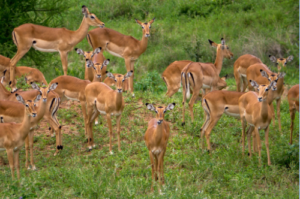
Habitat diversity compressed within the crater creates microcosms of different ecosystems. Open grasslands support zebra and wildebeest alongside various gazelle species. Acacia woodlands provide browse for elephants and buffaloes that descend from the highlands. Permanent springs create marshes where hippos spend daylight hours and waterbirds congregate. The alkaline Lake Magadi hosts seasonal flamingo populations that create stunning pink panoramas. This ecological compression means Tanzania safaris to Ngorongoro frequently produce complete Big Five sightings within single morning game drives—an achievement extraordinarily difficult to replicate elsewhere.
The conservation area extends far beyond the famous crater, encompassing remarkable additional features. The Crater Highlands support montane forests where rare species including mountain reedbuck find refuge. Empakaai Crater contains a breathtaking deep turquoise lake encircled by steep forested walls. Olduvai Gorge, often called the “Cradle of Mankind,” has yielded some of humanity’s most significant ancestral fossils including early hominid remains dating back millions of years. Traditional Maasai communities maintain pastoral traditions within the conservation area, demonstrating complex and sometimes contentious relationships between human cultures and wildlife conservation.
Tarangire National Park: The Elephant Sanctuary
Tarangire National Park deserves far greater recognition among Tanzania safaris destinations than its current profile suggests. This 2,850-square-kilometer park undergoes dramatic seasonal transformations, but during the June-October dry season, it rivals anywhere in Africa for wildlife concentrations. The Tarangire River flowing year-round through the park becomes a critical lifeline when surrounding areas desiccate completely, creating a natural gathering point for wildlife from territories spanning tens of thousands of square kilometers.
Elephant viewing in Tarangire achieves legendary proportions during peak dry months when herds numbering several hundred individuals converge on shrinking river pools. These gatherings create unparalleled opportunities to observe complex elephant social dynamics—matriarchs making decisions that affect entire family groups, adolescent males testing hierarchies through sparring, mothers teaching calves essential survival skills, and elaborate greeting ceremonies when separated groups reunite. The park hosts many impressive bulls carrying substantial tusks—individuals that have learned Tarangire offers relative safety from poaching pressures affecting more accessible areas. The sight of massive elephant herds moving through landscapes dominated by ancient baobab trees creates quintessential African imagery that defines Tanzania safaris for countless visitors.
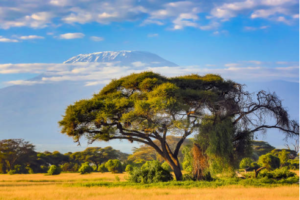
Tarangire’s landscape creates distinctive character dramatically different from typical savanna imagery. Giant baobab trees, some estimated at well over 1,000 years old, dominate the scenery with their massively swollen trunks and bizarrely twisted branches that appear like roots reaching skyward. These botanical ancients serve far more than aesthetic purposes—they store thousands of liters of water sustaining them through droughts, provide nutritious food through seasonal flowers, leaves, and calcium-rich fruit, and house entire ecological communities within their massive hollow trunks including bats, birds, insects, and small mammals.
Predator populations in Tarangire include lions adapted to both woodland and riverine hunting, leopards haunting dense thickets along watercourses where they’re rarely seen, and occasional African wild dog packs passing through during their wide-ranging movements. Herbivore diversity extends beyond elephants to include several rare antelope species superbly adapted to harsh conditions—fringe-eared oryx with their long straight horns, gerenuk standing bipedally to browse vegetation beyond other herbivores’ reach, and lesser kudu with their elegant spiraling horns and vertical white stripes. Avian diversity exceeds 550 recorded species making Tarangire exceptional for ornithologists alongside general wildlife enthusiasts, with many endemic species and breeding residents joined seasonally by Palearctic migrants.
Lake Manyara and Southern Wilderness
Lake Manyara National Park demonstrates that exceptional Tanzania safaris experiences don’t require vast territories. This compact park compresses extraordinary ecological diversity into approximately 330 square kilometers, with the alkaline lake itself covering roughly two-thirds of the area during high water periods. The park achieved international recognition for its tree-climbing lions—behavior documented consistently here though remaining rare elsewhere and not fully understood despite decades of observation.
Groundwater forests fed by springs flowing from the nearby escarpment create lush environments contrasting dramatically with surrounding semi-arid landscapes. These evergreen forests support elephants that materialize ghostlike through dense vegetation, massive buffalo herds seeking shade, and arboreal primates including olive baboons and blue monkeys. The ecological transitions from forest to woodland to grassland to lake shore occur within kilometers, each zone supporting distinct species assemblages demonstrating remarkable biodiversity compression.
Southern Tanzania safaris offer equally spectacular experiences with fundamentally different characters. Nyerere National Park spans approximately 30,000 square kilometers dominated by the mighty Rufiji River system creating opportunities unavailable in northern parks. Boat safaris reveal hippos, crocodiles, elephants coming to drink, and diverse waterbirds from aquatic perspectives. Extensive walking safaris immerse visitors in wilderness where human presence remains minimal and wildlife encounters feel genuinely pioneering.
Ruaha National Park encompasses over 20,000 square kilometers supporting an estimated 12,000 elephants alongside significant predator populations. The Great Ruaha River concentrates extraordinary wildlife during dry months. Southern Tanzania safaris appeal particularly to experienced travelers prioritizing authenticity over accessibility and wilderness over infrastructure.
Tanzania Safaris Activity Spectrum
Modern Tanzania safaris encompass diverse activities beyond traditional game drives. Walking safaris engage all senses—the vulnerability of moving through dangerous game territory on foot heightens awareness dramatically. Night drives reveal nocturnal specialists invisible during daylight—leopards beginning hunts, servals stalking prey, civets prowling, and rarely seen species like aardvarks and porcupines. Hot air balloon safaris provide ethereal dawn perspectives floating silently above awakening wilderness. Cultural encounters with Maasai communities add meaningful context about human-wildlife coexistence challenges and traditional pastoral lifestyles.
Practical Considerations
Successful Tanzania safaris require thoughtful planning. Most visitors arrive through Kilimanjaro or Dar es Salaam airports. Domestic flights efficiently connect parks despite strict baggage limitations. Accommodation spans ultra-luxury lodges with world-class amenities to authentic bush camping. Health preparations include malaria prophylaxis, relevant vaccinations, and comprehensive travel insurance covering medical evacuation from remote areas.
Conclusion
Tanzania safaris transcend typical tourism, offering transformative journeys into functioning wilderness where natural laws prevail. These immersive experiences reveal fundamental ecological truths about survival, predation, and interconnection that modern civilization obscures. Witnessing wildlife in authentic contexts—predators hunting, herds migrating, families interacting—creates profound conservation appreciation and passionate advocacy for protecting Earth’s remaining wild places.
Tanzania demonstrates that intact ecosystems generate substantial sustainable economic value through tourism, competing effectively with extractive alternatives while preserving irreplaceable natural heritage. Every Tanzania safaris experience unfolds uniquely based on countless variables, ensuring each visitor’s story remains distinctly personal. For authentic engagement with wild Africa, Tanzania safaris deliver consistently exceptional experiences combining abundant wildlife, spectacular landscapes, professional infrastructure, and genuine wilderness that enrich lives immeasurably.
Key Takeaways
- Tanzania safaris access nearly 50% of the country protected for conservation, creating vast functioning ecosystems supporting thriving wildlife populations
- The Serengeti hosts the world’s largest lion population (3,000+) and facilitates Earth’s greatest terrestrial migration involving 1.5+ million wildebeest
- Ngorongoro Crater contains 25,000-30,000 large mammals within the world’s largest intact caldera with Africa’s highest predator densities
- Tarangire provides extraordinary elephant encounters with hundreds gathering during dry season alongside 550+ bird species
- Activity diversity extends beyond game drives to walking safaris, night drives, balloon adventures, boat safaris, and cultural experiences
- Southern parks offer equally spectacular wildlife with fewer tourists, more remote wilderness, and unique activities unavailable in northern circuit
- Seasonal variations create distinct experiences—dry season optimizes viewing, calving season delivers drama, wet season provides exclusivity and photographic light
- Tourism directly funds conservation through park fees, anti-poaching operations, community development, and sustainable employment alternatives
- Accommodation options span ultra-luxury to authentic camping, all providing excellent wildlife access and genuine bush experiences
- Professional guides, mature infrastructure, and ethical operators ensure consistently high-quality experiences across all budget levels
Frequently Asked Questions
What makes Tanzania safaris superior to other African safari destinations?
Tanzania safaris excel through exceptional wildlife abundance, vast wilderness scale, and extraordinary ecological diversity. The country protects proportionally more land than most alternatives, enabling complete ecosystems and natural migrations to function uninterrupted. The Serengeti hosts the world’s largest lion population and greatest wildlife migration. Ngorongoro offers unique crater ecology with exceptional predator densities. Professional guiding standards, diverse accommodations from budget to ultra-luxury, and mature tourism infrastructure ensure quality experiences. While Kenya offers accessibility, Botswana exclusivity, and South Africa variety, Tanzania’s combination of scale, diversity, abundance, and authentic wilderness creates unparalleled overall experiences for most visitors seeking classic African safaris.
What should I budget for comprehensive Tanzania safaris including all expenses?
Tanzania safaris costs vary dramatically based on accommodation level, season, duration, and preferences. Budget camping safaris cost approximately $200-300 per person daily, totaling $1,400-2,100 for seven days including basic camping, meals, park fees, and game drives. Mid-range lodge safaris range $400-700 daily or $2,800-4,900 weekly with comfortable accommodations and better vehicles. Luxury safaris cost $800-1,500+ daily or $5,600-10,500+ weekly with five-star lodges, gourmet dining, and premium services. Ultra-luxury private experiences exceed $2,000 daily or $14,000+ weekly. Additional expenses include international flights ($800-2,500), visas ($50-100), comprehensive travel insurance ($150-400), tips for guides and staff ($30-50 daily totaling $210-350 weekly), drinks, and personal expenses. Peak season (June-October) commands 30-50% premiums over shoulder and low seasons. Many operators offer all-inclusive packages simplifying budgeting.
When is the absolute best time to visit for optimal Tanzania safaris experiences?
Optimal timing depends entirely on priorities and interests. June-October dry season provides best general wildlife viewing as animals concentrate predictably around permanent water sources and reduced vegetation dramatically improves visibility, though popularity brings highest prices and most crowded conditions in popular parks. January-March delivers the spectacular Serengeti calving season with approximately 500,000 wildebeest calves born within concentrated weeks, triggering intense predation providing extraordinary viewing and photography opportunities. June-July features dramatic Grumeti River crossings in western Serengeti where wildebeest face Nile crocodiles. August-October showcases the migration’s most spectacular Mara River crossings in northern Serengeti with massive herds plunging repeatedly into crocodile-infested waters. November-December short rains provide excellent value with good wildlife viewing, beautiful landscapes, and significantly fewer tourists. April-May long rains present logistical challenges but reward adventurous travelers with dramatic photographic light, lush scenery, extreme exclusivity, and lowest annual prices.
Are Tanzania safaris appropriate and safe for families traveling with young children?
Tanzania safaris can provide excellent family experiences though suitability and policies vary significantly between properties and operators. Many luxury lodges accept children aged 6+ years with some activity restrictions, while specialized family-friendly camps welcome all ages with tailored programs and facilities. Private vehicles and accommodations offer maximum flexibility for family needs, schedules, and pace. Important considerations include children’s attention spans for long game drives lasting 3-4 hours, early morning departures often before dawn, ability to remain quiet during wildlife encounters, and realistic expectations about heat and basic facilities. Some properties provide interconnecting family suites, child-appropriate menus, shortened game drives, swimming pools, and specialized junior ranger programs teaching tracking and ecology. Walking safaris typically require minimum ages of 12-16 years for safety reasons. Research specific properties’ child policies thoroughly, communicate children’s ages and needs clearly with operators, and select companies with proven family safari experience.
Can visitors reliably see the Great Migration throughout the year on Tanzania safaris?
The Great Migration moves continuously through the Serengeti ecosystem following seasonal rainfall patterns that affect grass growth and availability, meaning it’s technically visible throughout the year but in dramatically different locations requiring strategic timing and planning. January-March: southern Serengeti plains host the spectacular calving season with newborns attracting intense predation from lions, cheetahs, leopards, and hyenas. April-May: herds move northwest toward central Serengeti through the long rains with movements often dispersed. June-July: western Serengeti features Grumeti River crossings where herds face large Nile crocodiles in dramatic confrontations. August-October: northern Serengeti showcases the most spectacular and photographed Mara River crossings as massive herds plunge repeatedly into crocodile-infested waters in desperate attempts to reach northern grazing lands. November-December: herds begin the southward return migration following short rains. Exact timing varies by several weeks annually based on unpredictable rainfall patterns. Flexible travel dates, visiting multiple regions, or extended stays significantly increase probability of witnessing specific migration phenomena.
What essential items must I pack for Tanzania safaris to ensure comfort and success?
Pack neutral-colored lightweight clothing (khaki, olive, tan, brown) in breathable fabrics like cotton or technical materials, avoiding bright colors, white, black, and military camouflage patterns which are illegal in Tanzania. Bring layers accommodating dramatic temperature variations from cold pre-dawn game drives (8-14°C/46-57°F) to hot midday temperatures (28-35°C/82-95°F). Essential items include comfortable closed-toe walking shoes or light hiking boots, wide-brimmed sun hat, quality polarized sunglasses, SPF 50+ broad-spectrum sunscreen, and DEET-based insect repellent (minimum 30% concentration). Camera equipment should include telephoto zoom lens (minimum 200mm, ideally 400-600mm for wildlife at safe distances), extra batteries as cold mornings drain power quickly, abundant memory cards, beanbag or similar stabilization for vehicle window mounting, and lens cleaning supplies for constant dust. Quality binoculars (8×42 or 10×42 magnification) dramatically enhance wildlife observation and bird identification. Most lodges provide laundry services allowing lighter packing. Use soft-sided duffel bags mandatory for domestic flights with strict 15kg weight limits per passenger.
Are professional guides truly necessary or can experienced travelers self-drive Tanzania safaris?
Professional guides are strongly recommended and legally required in most Tanzania national parks for multiple critical reasons beyond simple convenience. Self-driving faces substantial challenges including extremely poor road conditions especially during rains, complex navigation without reliable signage or GPS coverage, mandatory registered guide requirements in most parks, and most critically, missing invaluable expertise that transforms mediocre safaris into exceptional ones. Professional guides possess encyclopedic knowledge about animal behavior accumulated through years of daily observations, expert tracking skills developed through practice, comprehensive bird identification abilities, intimate knowledge of optimal viewing locations and seasonal movements, critical safety protocols around potentially dangerous wildlife, and deep ecological understanding of ecosystem relationships. They dramatically enhance wildlife sighting success rates, provide educational context enriching experiences, ensure safety around lions, elephants, buffalo, and other dangerous animals, and contribute to conservation through sustainable employment. Most national parks explicitly require registered guides for entry. Self-driving might work for extremely experienced African travelers with proper 4×4 vehicles, comprehensive mechanical skills, extensive prior safari experience, and accepted bush skills, but even seasoned travelers benefit enormously from professional guiding that easily justifies costs through dramatically enhanced experiences, safety, and education.
How far in advance should I book Tanzania safaris to secure preferred accommodations?
Booking timelines depend significantly on season, accommodation preferences, and flexibility. Book Tanzania safaris 10-15 months ahead for peak season travel (July-October) when premium lodges and camps in prime locations fill earliest, often over a year in advance for the most exclusive properties. Migration viewing periods require even earlier booking—12-18 months for top accommodations during river crossing seasons (August-October) and calving periods (January-March) when demand peaks. Shoulder seasons (November-December, March-June) offer more flexibility with 4-6 months advance booking typically sufficient for good accommodation choices. Last-minute bookings (1-3 months ahead) occasionally work for low season (April-May) or if highly flexible about accommodations and itineraries, but severely limit choices and rarely secure most desirable properties. The most sought-after lodges in premier locations like central Serengeti, Ngorongoro Crater rim, and exclusive Tarangire positions book furthest ahead. Budget camping safaris utilizing public campsites remain generally available with shorter notice. Early booking ensures preferred accommodations, better pricing through early-bird discounts often 10-20% off, fully coordinated logistics, domestic flight reservations, and peace of mind for significant financial investments in once-in-lifetime experiences.
