

Rwanda is best known for mountain gorillas, but it also has a savannah park that surprises most first-time visitors. Akagera National Park, in the east of the country along the Tanzanian border, offers elephants, giraffes, zebras, hippos, buffalo and even lions, within easy reach of Kigali. For travellers with limited time, a 1 day Akagera National Park trip is one of the most rewarding wildlife excursions in East Africa.
This guide explains what a day trip involves, what you can expect to see, how much it costs, how to prepare and how to get the most from a single day.
Why Akagera Works So Well as a Day Trip
Close to Kigali. The park lies about 110 km northeast of the capital. One listing describes it as about 2.5 hours from Kigali, so a dawn departure puts you inside the park in time for the best light of the morning.
Diverse habitats. Akagera combines open savannah, acacia woodland, papyrus swamps, lakes and rolling hills. One operator describes it as a mixture of savannah and forested areas giving varied sights of Rwanda. Within one day you can move from grassland to lakeshore without long transfers.
A conservation success story. Akagera is managed by African Parks in partnership with the Rwanda Development Board. After years of poaching and habitat pressure, the park has seen the reintroduction of lions and black rhinos and has become a showcase for community-supported conservation.
Easy pairing with gorillas. Many visitors combine Akagera with Volcanoes National Park, using the savannah as a counterpoint to the forest. A day trip is the simplest way to add it if you are based in Kigali.
What You Can See
Akagera is one of Africa’s smaller safari parks at roughly 1,200 square kilometres, but it holds a wide range of wildlife. Typical sightings include:
- Elephants moving in family groups
- Giraffes, particularly in the open woodland valleys
- Zebras, impalas, topis, waterbucks and elands
- Buffalo in sizeable herds
- Hippos and Nile crocodiles in Lake Ihema and the surrounding waters
- Lions, reintroduced and now breeding, though sightings are never guaranteed
- Black and white rhinos, which are rare and usually elusive
- Leopards, seen only occasionally
- Over 400 bird species, including the shoebill, fish eagles, kingfishers and papyrus gonoleks
One 2026 guide describes the park as home to lions, elephants, buffalo, rhinos, leopards, zebras, giraffes and over 12,000 animals. Wildlife density is lower than in the great Tanzanian and Kenyan parks, so patience and a good guide matter.
Sample 1 Day Akagera Itinerary
A typical day trip from Kigali runs like this:
4:30–5:00 am: Depart Kigali. An early start is essential. You are collected from your hotel and drive east through rural Rwanda, passing villages and farmland as the sun rises.
7:30–8:00 am: Enter the park. After registration at the entrance, you head straight into the best game-viewing hours. Animals are most active in the early morning, and the light is ideal for photography.
8:00–12:00 pm: Morning game drive. Your guide tracks wildlife across the southern and central regions, perhaps through the giraffe valley and along the lakeshore.
12:00–1:30 pm: Picnic lunch. Many operators include a packed lunch eaten at a scenic spot or at a lodge such as Akagera Game Lodge.
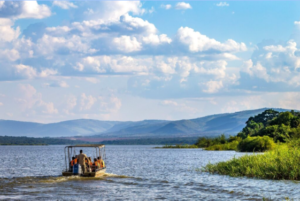
1:30–3:00 pm: Boat safari on Lake Ihema (optional). A boat trip gives you close views of hippos, crocodiles and water birds. One operator highlights a boat safari on Lake Ihema, where you will see many hippos and crocodiles.
3:00–4:30 pm: Afternoon game drive. A second drive offers a different light and often more active animals as temperatures drop.
4:30–5:00 pm: Exit the park and drive back to Kigali, arriving in the evening.
Some operators offer two formats: a full-day game drive, and a shorter combination of boat trip and game drive. One listing describes a full game drive that can last about seven hours depending on sightings. Choose the version that suits your interests and energy
Costs: What to Expect
The cost of a day trip depends on whether you book a guided tour or self-drive, and on which extras you add.
Park entry fees. Entry is set by African Parks and charged per person per day. Published figures vary slightly between sources and years, with one source listing an entry fee of about $82, while another reports park entry of $100 per international adult and $50 per international child. Because of this variation, confirm the current fee for your travel date.
Guide fees. If you drive yourself, you can hire a park guide. African Parks lists guides for self-drive game drives at $25 for half a day and $40 for a full day.
Day tour packages. Group and private day tours usually include a 4×4 vehicle, a driver-guide, lunch, water and park entry. One local operator advertises a full-day Akagera game drive from around $220 to $275 per person depending on group size, covering transport, an English-speaking guide, park entry and a picnic lunch. Private departures for one or two people cost more per head than larger groups.
Extras to budget for:
- Boat safari on Lake Ihema
- Tips for your guide and driver
- Drinks and snacks
- Photography fees, if you plan commercial filming (the park charges separately for this)
- Travel insurance
Prices change, so request an itemised quote that states whether park fees, lunch and the boat trip are included.
Self-Drive or Guided?
Guided tour. This is the most popular choice. A professional guide knows where animals have been seen, spots wildlife you would miss and explains behaviour and ecology. You also avoid the stress of an early-morning drive and navigation.
Self-drive. Akagera allows visitors to drive their own vehicles, which suits confident, experienced travellers. You will need a suitable car, ideally a high-clearance 4×4 in the wet season, and should carry a park map, fuel and water. Hiring a park guide for the day can combine the freedom of self-drive with local knowledge.
For a one-day visit, a guided tour is usually the more efficient option, because it maximises time in the park.
When to Go
Akagera can be visited all year, but conditions differ:
- Dry seasons (roughly June to September and December to February): Wildlife congregates near water, vegetation is thinner and roads are firmer. These are generally the best months for game viewing. One 2026 guide recommends visiting between June and October.
- Wet seasons (roughly March to May and October to November): The landscape is lush and green, bird watching is excellent and visitor numbers are lower. Some tracks can become slippery, so a 4×4 is important.
Weekday visits are generally quieter than weekends, particularly for local and resident visitors.
Packing Checklist for a Day Safari
- Neutral, lightweight clothing in greens, browns or khakis
- A light jacket or fleece for early mornings
- Sturdy closed shoes
- Hat, sunglasses and sunscreen
- Insect repellent
- Binoculars, which transform wildlife viewing
- Camera with a zoom lens and spare batteries
- Reusable water bottle
- Passport or a copy, in case of checks
- Cash for tips and small purchases
Safari Etiquette and Safety
- Stay inside your vehicle unless your guide indicates it is safe to step out.
- Keep your voice low and avoid sudden movements.
- Never feed or approach wild animals.
- Respect speed limits and park rules. Fines apply, with the park listing a $150 fine for breaking park rules and regulations.
- Take your rubbish with you.
- Listen to your guide on rhino and lion encounters, which require extra caution and distance.
Is One Day Enough?
A single day gives you an excellent introduction. You can see a good variety of wildlife, enjoy a boat trip and experience the landscape. However, the early start and long drive mean a full day of travel, and you have limited time to look for rarer species such as lions, leopards and rhinos. If your schedule allows, an overnight stay lets you do a sunset boat cruise, an early-morning drive and an evening or night drive, which greatly improves your chances of special sightings. Some operators offer short two-day Akagera packages for exactly this reason.
Conclusion
A 1 day Akagera National Park trip is one of the best ways to add classic safari scenery to a Rwanda itinerary. It is close to Kigali, rich in habitats, and offers elephants, giraffes, hippos, birdlife and the chance of lions, all in a single, well-organised day. The trade-off is a long, early start and less time to search for elusive species, but with a good guide, an early departure and a well-chosen mix of game drive and boat safari, it is more than enough for a memorable day. Confirm current park fees, book a reputable operator, pack for dust and sun and treat the day as an invitation to slow down and watch the savannah. If the day leaves you wanting more, you will know exactly where to return.
Key Takeaways
- Akagera National Park is about 2.5 hours from Kigali, making a one-day safari realistic.
- Expect elephants, giraffes, zebras, buffalo, hippos, crocodiles, abundant birdlife and the chance of lions.
- Day trips typically include a morning game drive, lunch, an optional boat trip on Lake Ihema and an afternoon drive.
- Guided day tours often cost in the low hundreds of dollars per person, and park entry fees reported for 2026 range from about $82 to $100 per adult. Confirm current rates.
- Guides are available for self-drivers at $25 per half day and $40 per full day.
- June to October is generally best for game viewing, but the park is open year-round.
- Start early, bring binoculars and consider an overnight stay for better chances of rare sightings.
Frequently Asked Questions
- Can I visit Akagera in one day from Kigali?
Yes. The drive takes around two to three hours each way, so a 4:30–5:00 am departure gives you a full day in the park and a return to Kigali by evening. - How much does a one-day Akagera trip cost?
Group tours are often advertised from around $220 to $275 per person, depending on group size and inclusions, while private trips cost more. Park fees and extras vary, so request an itemised quote. - Will I see lions?
Lions have been reintroduced and are breeding, but sightings are never guaranteed. Early mornings and good guidance improve your chances. - Can I see the Big Five in Akagera?
The park is often described as a Big Five destination, but leopards and rhinos are rarely seen, so set your expectations accordingly. - Do I need a guide?
Not necessarily, as self-drive is allowed, but a guide greatly improves wildlife viewing and is recommended for first-time visitors. - Is a boat safari included?
It depends on the package. Many operators offer it as an optional or included extra on Lake Ihema. - When is the best time to visit?
Dry months, roughly June to September and December to February, are best for game viewing. The wet season offers lush scenery and fewer visitors. - Is Akagera suitable for children?
Yes. Many families visit, and children’s entry fees are typically lower. Check age policies with your operator, particularly for boat trips. - What should I bring?
Neutral clothing, a hat, sunscreen, insect repellent, binoculars, a camera and plenty of water. - Should I stay overnight instead?
If your schedule allows, yes. An overnight stay lets you add a sunset boat cruise and an early-morning drive, and reduces the time spent on the road.
